Tasmanian devil
Sarcophilus harrisii
Mammals · family Dasyuridae · order Dasyuromorphia
Endangered on the IUCN Red List
Oʻzbekcha: Xaltali iblis
About
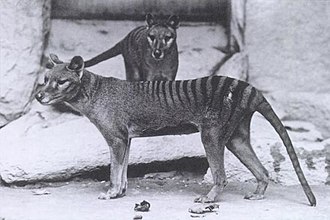
The Tasmanian devil is a carnivorous marsupial of the family Dasyuridae. It was formerly present across mainland Australia, but became extinct there around 3,500 years ago; it is now confined to the island of Tasmania. The size of a small dog, the Tasmanian devil became the largest carnivorous marsupial in the world following the extinction of the thylacine in 1936. It is related to quolls, and distantly related to the thylacine. It is characterised by its stocky and muscular build, black fur, pungent odour, extremely loud screech, keen sense of smell, and ferocity when feeding. The Tasmanian devil's large head and neck allow it to generate among the strongest bites per unit body mass of any extant predatory land mammal. It hunts prey and scavenges on carrion.
From Wikipedia, CC BY-SA 4.0.
Where it has been recorded




- Records
- 36,021
- Countries
- 2
- Recorded
- 1888–2026
Most records come from
- Australia 35,990
- United States 31
Records are places where people found and reported the animal, from GBIF; some come from zoos, museums and tracking studies, and well-studied countries have far more. Squares on the map: brighter means more records.